
February 1, 2026
The Program on Science and Global Security (SGS) is pleased to report the award of a two-year $800,000 core support grant by Carnegie Corporation of New York. The grant will support SGS in scientific and technical research, critical policy analysis, education, and outreach to enable and advance national and international policies for nuclear disarmament, arms control, and nonproliferation to support a safer and more peaceful world.
SGS has received Carnegie Corporation since the 1980s. The previous core-support grant from Carnegie was received in 2024. Over this time, and supported by this new Carnegie grant, SGS will continue its scientific and policy research over the next two years. This will include technical analysis to assess the impact of emerging technologies for nuclear weapon risks and enabling new global policy interest and cooperation on nuclear arms restraints, reductions, and disarmament.
SGS aims also to advance its assessment of the U.S. Golden Dome, which plans a vast network of space-based weapons systems to detect and destroy “ballistic, hypersonic, advanced cruise missiles, and other next-generation aerial attacks from peer, near-peer, and rogue adversaries.”
SGS will continue its long standing and pioneering work on nuclear disarmament verification, including with the international Expert Panel on Nuclear Disarmament Verification (EXPAND). This group aims to identify verification challenges associated with non-strategic nuclear weapons, delivery systems for nuclear weapons, tritium control, and outer space. It will prepare for and complement the work of the UN Group of Scientific and Technical Experts on Nuclear Disarmament Verification, which will begin in 2027.
SGS will further explore fissile material dangers by looking at the increasing interest in nuclear fusion as a commercial energy source. Fusion power systems can in principle be used to make significant amounts of fissile material, and they can involve kilogram-quantities of tritium. SGS research in this area will examine possible strategies to monitor nuclear fusion reactors and assess different plant designs with respect to their safeguardability and proliferation resistance.
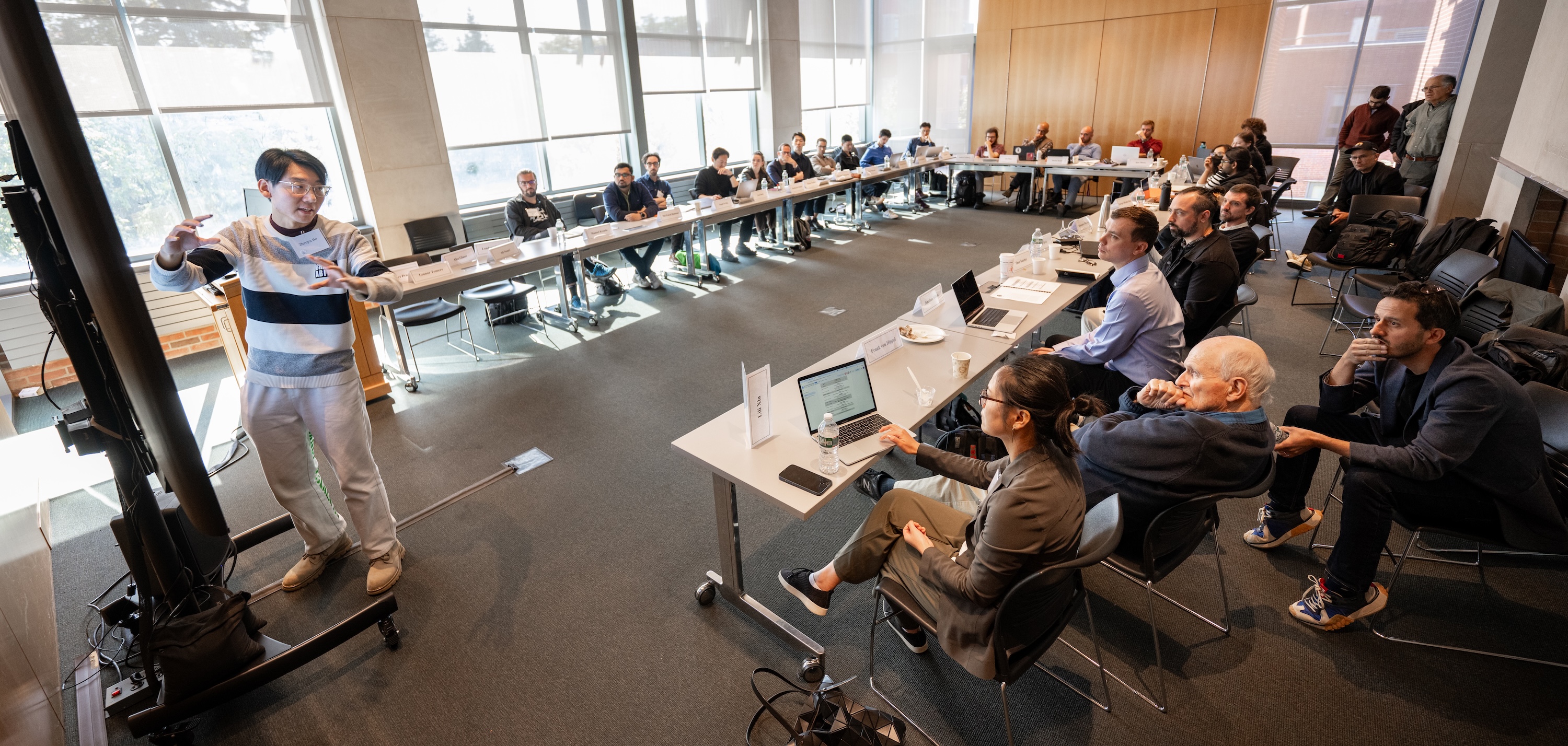
As a university program, SGS will use the Carnegie grant to invest more in education and training of the next generation of pre-doctoral, doctoral, and postdoctoral researchers to advance nuclear arms control, disarmament, nonproliferation. This includes the annual Princeton School on Science and Global Security. Since 2020, the School has brought next-generation scientists and engineers from around the world to Princeton to learn about nuclear weapons policy.
To support the wider scholarly and policy community, SGS will use Carnegie funds to sustain its role as the editorial home to the journal Science and Global Security. Edited and managed by SGS since its launch in 1989, the journal has become the leading international peer-reviewed journal for technical nuclear arms control, disarmament, and nonproliferation policy.
SGS also will continue to manage and host the International Panel on Fissile Materials. Established by SGS in 2006, this 16-country group of independent experts works to foster policies to end production and use of nuclear weapon materials worldwide.
SGS also will keep leading and strengthening the Physicists Coalition for Nuclear Threat Reduction and build its role in the physics community and in the arms control community. Founded by SGS in 2019 to provide scientists opportunities to learn about and engage with nuclear arms control policy, the Physicists Coalition for Nuclear Threat Reduction works for substantive changes in nuclear arsenals, force postures, and declaratory and fulfillment of the long-standing international obligation to achieve nuclear disarmament. It now has over 1800 members.
At the international level, SGS will continue to be an active participant in multilateral diplomatic processes on nuclear weapons at the United Nations and within treaty structures. In particular, SGS helped establish and supports the Scientific Advisory Group of the Treaty on the Prohibition of Nuclear Weapons (TPNW). Set up in 2023, this is the first UN treaty mandated international scientific body to advance nuclear disarmament. This has special access to governments and non-governmental organizations connected to the TPNW and to the debates with nuclear-armed states, and to the United Nations system.
SGS will look for new opportunities and partners for public engagement as way to build audiences and constituencies for nuclear policy ideas, using cultural production as a means to engage and inform new audiences.