
June 1, 2026
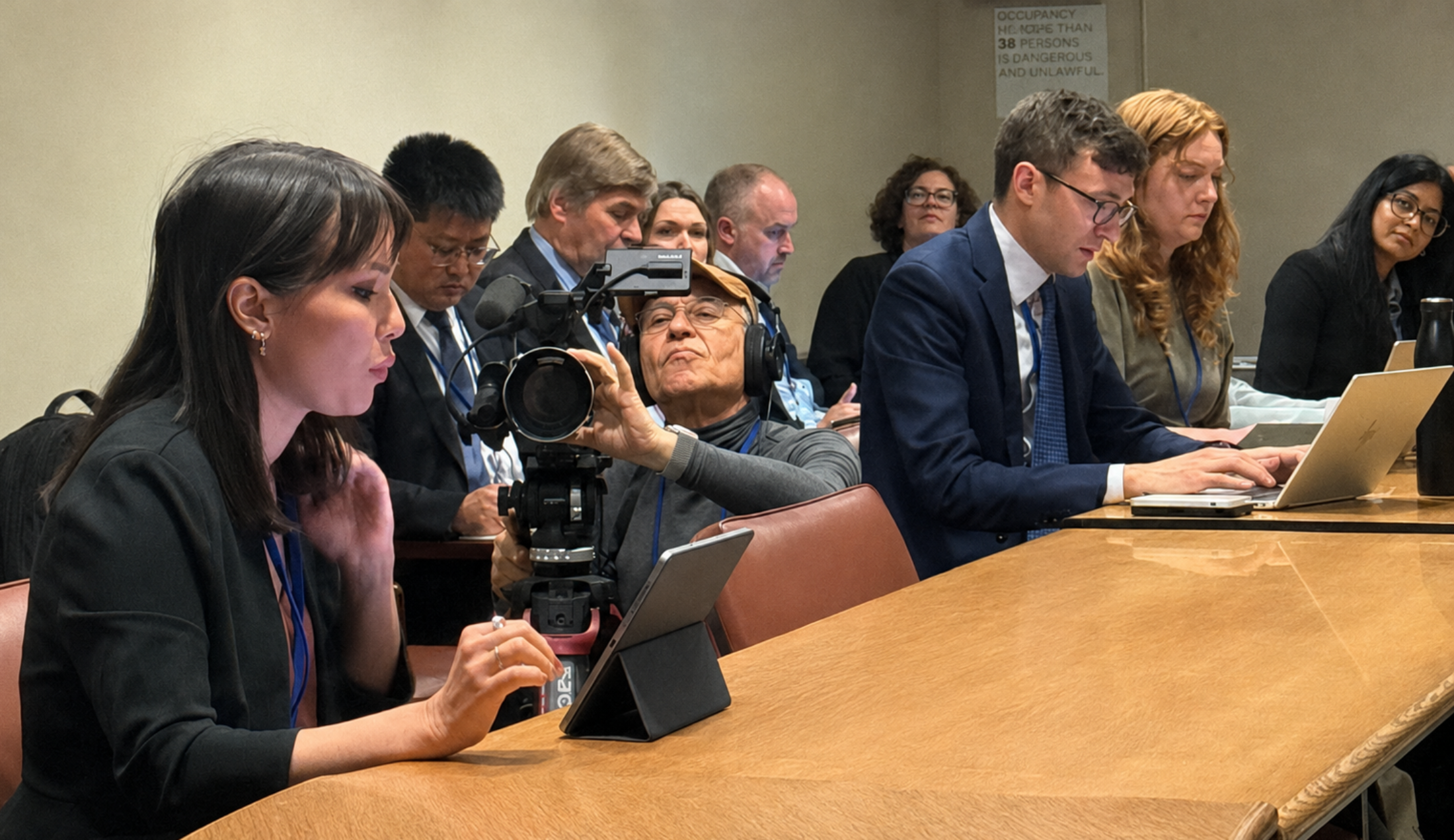
The Princeton Program on Science and Global Security (SGS) organized three events during the 2026 Review Conference of the Parties to the Treaty on the Non-Proliferation of Nuclear Weapons (NPT) at the United Nations. All three SGS events at the NPT Review Conference were co-sponsored by NPT states. SGS members also presented in events organized by various states and civil society groups.
The NPT entered into force in 1970, and every five years NPT states parties meet in a Review Conference to assess and advance the purposes and the provisions of the treaty. The treaty aims to eliminate nuclear weapons, and prevent the further spread of nuclear weapons by safeguarding the fissile materials that are the key ingredients for nuclear weapons and assuring the peaceful use of nuclear energy. It now has 191 member-states.
Ray Acheson, a visiting researcher at SGS reported on the 2026 Conference in nine issues of NPT News in Review covering key debates and national positions for the Reaching Critical Will disarmament program. Acheson has reported on analyzed NPT conferences since 2005.
The first SGS event, on 4 May 2026, was “Mobilizing Scientific Communities to Advance Nuclear Disarmament”. It was cosponsored by Austria, Brazil, Mexico, New Zealand.
This event featured presentations on how scientists understand today’s nuclear challenges, what is being done to address them, and what more is needed from scientists, governments, and the public. There was a special focus on the need for global processes to address nuclear dangers to be more representative, better informed, more publicly accessible, and more collaborative. SGS presenters were Frank von Hippel, Stewart Prager, Sébastien Philippe, Zia Mian, Leyatt Betre and Tamara Patton.
Mian, Betre, and Patton introduced a new SGS introductory resource guide on the global environmental effects of nuclear war. This SGS resource guide is being developed to support and expand scientific engagement. It highlights key studies shaping current scientific understanding of the environmental effects of nuclear war, including climatic and radiological impacts, as well as areas of open research. This guide is intended to support researchers, teachers, and students, particularly those new to the field and those seeking to contribute from a wider range of disciplinary and geographic perspectives.
The second SGS side-event was Emerging Technologies and Nuclear Weapons Risks. It was held on 5 May 2026. Austria, Ireland, New Zealand, Mexico were cosponsors.
The event presented ongoing SGS-led research on the current race to develop new military technologies relying on artificial intelligence, sensors with continuous global coverage, missile defense initiatives, and outer space developments that carry significant global security implications. This research effort aims to advance a science-based common understanding and recognition of shared vulnerability due to emerging technological developments and so enable new interest and cooperation in restraints, reductions, and disarmament.
SGS presenters were Zia Mian, Igor Morić, Sébastien Philippe, and Tamara Patton. Igor Moric presented on Golden Dome and Effects of Nuclear Explosions in Space; Tamara Patton discussed Automating Prediction: AI and the Production of Nuclear Threat Knowledge; Sébastien Philippe focused on Counterforce Capabilities and Nuclear War Effects.
The third side event was on 15 May and the topic was “Fissile Material Issues Today: Challenges for International Control”. It was cosponsored by Austria, Brazil, and Japan. The event was a presentation by members of the SGS -based International Panel on Fissile Materials (IPFM).
Founded by SGS in January 2006, IPFM is an independent group of experts from 18 countries, including nuclear weapon states and non-nuclear weapon states - Brazil, Canada, China, France, Germany, India, Iran, Ireland, Japan, the Netherlands, Norway, Pakistan, South Korea, Russia, South Africa, Sweden, the United Kingdom, and the United States. The mission of the IPFM is to inform and strengthen policy initiatives worldwide to end production and eliminate stockpiles of plutonium and highly enriched uranium, the key ingredients for nuclear weapons. Control of these materials is critical to nuclear weapons disarmament, and to halting the proliferation of nuclear weapons.
The presenters were Frank von Hippel (HEU and plutonium issues today), Seyed Hossein Mousavian (Fissile material control lessons from Iran and the Middle East), Alexander Glaser (Advanced nuclear technologies, and Zia Mian (Rethinking international fissile material controls).
Ray Acheson a visiting researcher at SGS has been covering NPT review conferences since 2005 for the disarmament program Reaching Critical Will and led this effort since 2007. Founded in 1999, it monitors and analyses international disarmament processes, including providing primary resources, reporting, and civil society engagement and coordination at the United Nations.